
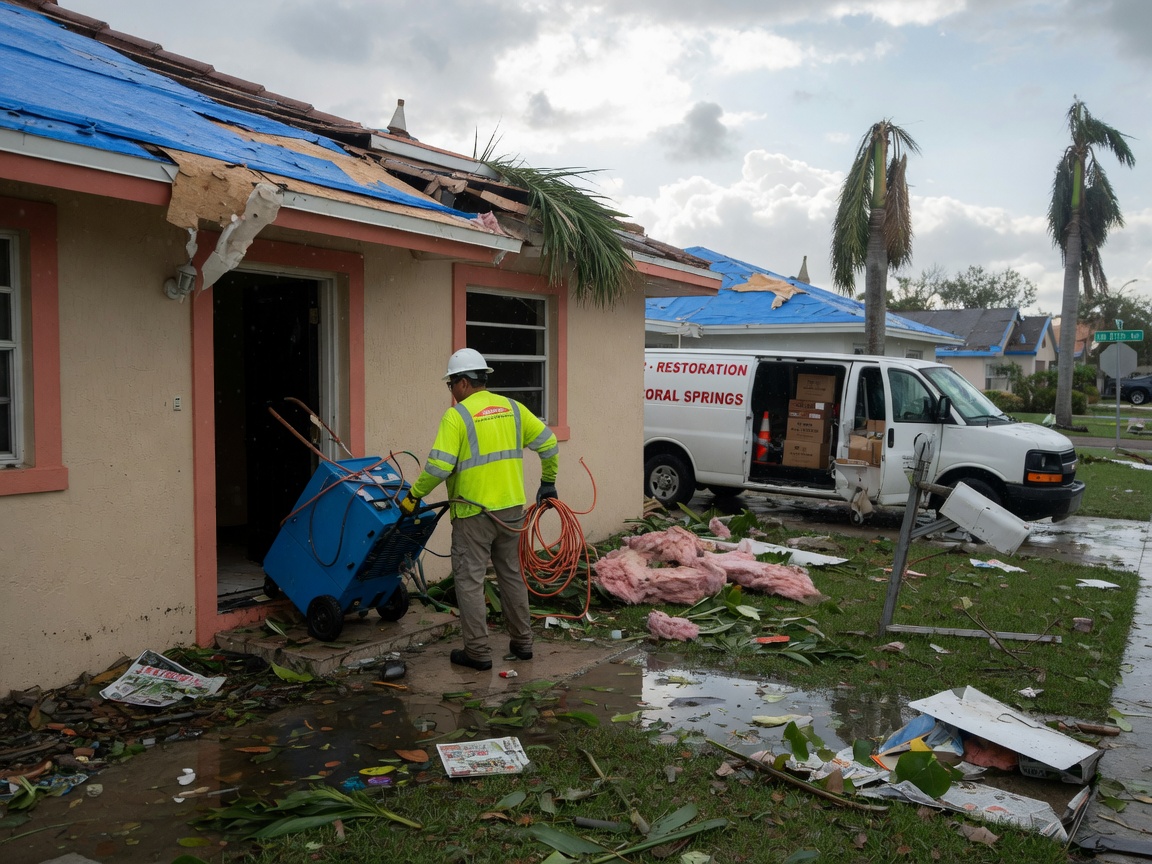
Coral Springs homes in Ramblewood and around the Coral Springs Country Club often feature concrete block construction from the 1970s through 1990s that takes on water through roof penetrations and window seals during tropical monsoon events. Once heavy rain enters wall cavities, the combination of warm winter temperatures and high humidity accelerates mold growth within 48 hours, requiring rapid removal of saturated drywall and insulation before secondary damage spreads to adjacent rooms.
Broward County building codes require permits for structural drying and reconstruction after storm events exceeding certain thresholds, so crews coordinate with local inspectors when removing load-bearing elements in older Downtown Coral Springs properties. Flooding from nearby canals and low-lying streets in Margate-adjacent sections also brings sediment into crawl spaces, demanding specialized extraction equipment that reaches under slabs without disturbing utilities.
Sawgrass Nature Center area properties sit on slightly higher ground yet still experience wind-driven rain that bypasses hurricane shutters on east-facing elevations. Technicians routinely discover hidden moisture behind tile in bathrooms and kitchens where previous owners had installed moisture-sensitive underlayment, turning a roof leak into widespread subfloor damage that must be addressed before new flooring can be installed.
Parkland borders bring additional challenges when storm runoff crosses municipal lines and overwhelms shared drainage, leaving standing water against foundation walls for days. Restoration teams document every step with moisture meters and thermal imaging to satisfy insurance adjusters who are familiar with the distinct soil conditions and seasonal rainfall patterns unique to western Broward County.
Technician insight
In Coral Springs the thing that catches most people out with Hurricane Storm Damage Restoration is how fast mold sets in behind the concrete block walls once monsoon rains push water past window seals. Homes in Ramblewood built before updated wind codes often have older sealant that fails first, and if you don't pull the baseboards and check the bottom plates within the first 48 hours the job doubles in scope because the humidity never drops enough for natural drying.
Ramblewood Home After Tropical Storm
Heavy rain from a passing hurricane forced water under the tile in a Ramblewood kitchen and into the wall cavities. Inspection revealed saturated insulation along two exterior walls with early mold starting on the paper facing. Crews removed the wet materials, dried the block cavities with directed airflow, and replaced the drywall and base cabinets so the family could return without lingering odors.
Hurricane Storm Damage Restoration Services We Offer
✓Emergency Roof Tarping
Secure temporary tarps over damaged roofs in Coral Springs neighborhoods to stop further water entry until permanent repairs begin.
✓Storm Flood Water Extraction
Remove standing water from homes in Ramblewood and Downtown Coral Springs using truck-mounted pumps and moisture detection tools.
✓Wind-Driven Rain Drying
Deploy industrial air movers and dehumidifiers to dry wall cavities and ceilings after hurricane winds force water behind siding and windows.
✓Mold Remediation After Storms
Contain and remove mold colonies that develop quickly in Coral Springs humid conditions following hurricane moisture intrusion.
✓Sediment and Debris Removal
Clear flood-borne silt and organic debris from crawl spaces and yards in areas near City Park and Sawgrass Nature Center.
Hurricane Storm Damage Restoration Cost in Coral Springs, FL
| Service | Typical Range | What Affects It |
|---|---|---|
| Emergency Tarping | $350–$850 | Varies by roof pitch and square footage damaged |
| Water Extraction | $800–$2,200 | Depends on volume and access to crawl spaces or slabs |
| Full Drying Package | $1,200–$3,500 | Includes equipment rental and daily monitoring in humid climate |
| Mold Remediation Add-On | $600–$1,800 | Based on affected square footage behind walls |
Ranges are typical for Coral Springs, FL and confirmed with an exact written quote before any work starts.
How it works
- 1
Initial Assessment
Arrive within hours, document all affected areas with photos and moisture readings, and review insurance requirements for Broward County properties.
- 2
Water Removal
Extract standing water and saturated materials using equipment suited to concrete block construction common in Ramblewood and Downtown Coral Springs.
- 3
Drying and Monitoring
Set up drying zones, track daily moisture levels, and adjust equipment until readings reach pre-storm baselines.
- 4
Reconstruction
Replace damaged drywall, flooring, and insulation while coordinating any required permits with local inspectors.
Pricing
Pricing based on square footage affected, depth of water intrusion, and required drying duration after on-site inspection.